“Well, I know we ain't in Alaska, but it appears to me that the dark has a lot more territory.”
“You're lookin' at it wrong—the sky, I mean. Once there was only dark. If you ask me, the light's winning.
Often in those hours when night blends into day and (for some reason unbeknownst to my mere mortal senses) I cannot fall asleep, I am filled with a deep existential dread. Subsumed by the paralyzing, warm, and heavy embrace of my duvet, I gaze haphazardly at the bare ceiling of my dorm room, tracing the golden splinter of the streetlight that peeks through the cosmically-impossible-to-close gap in my curtains. Outside, I hear the shuffling of furtive steps and the squeaking of unlubed doorknobs as my fellow insomniacs weave in and out of the long hallway connecting our living spaces (God might know where they were going, were it not such an ungodly hour). My room smells of coffee—specifically Major Dickason’s blend—which makes sense, since I’ve neatly packaged the grounds into Ziploc bags (were they white instead of black, you might get the wrong impression) and placed them in the corner of myself. The smell reminds of my father.
I start to wonder if there is a point to all this. To the four years I will spend in college, to the forty I will spend working afterward, to the amount of words like this I will write across a lifetime, to the amount of money I will make, to the piece of paper I will receive certifying my degree, and to everything I ever do in life.
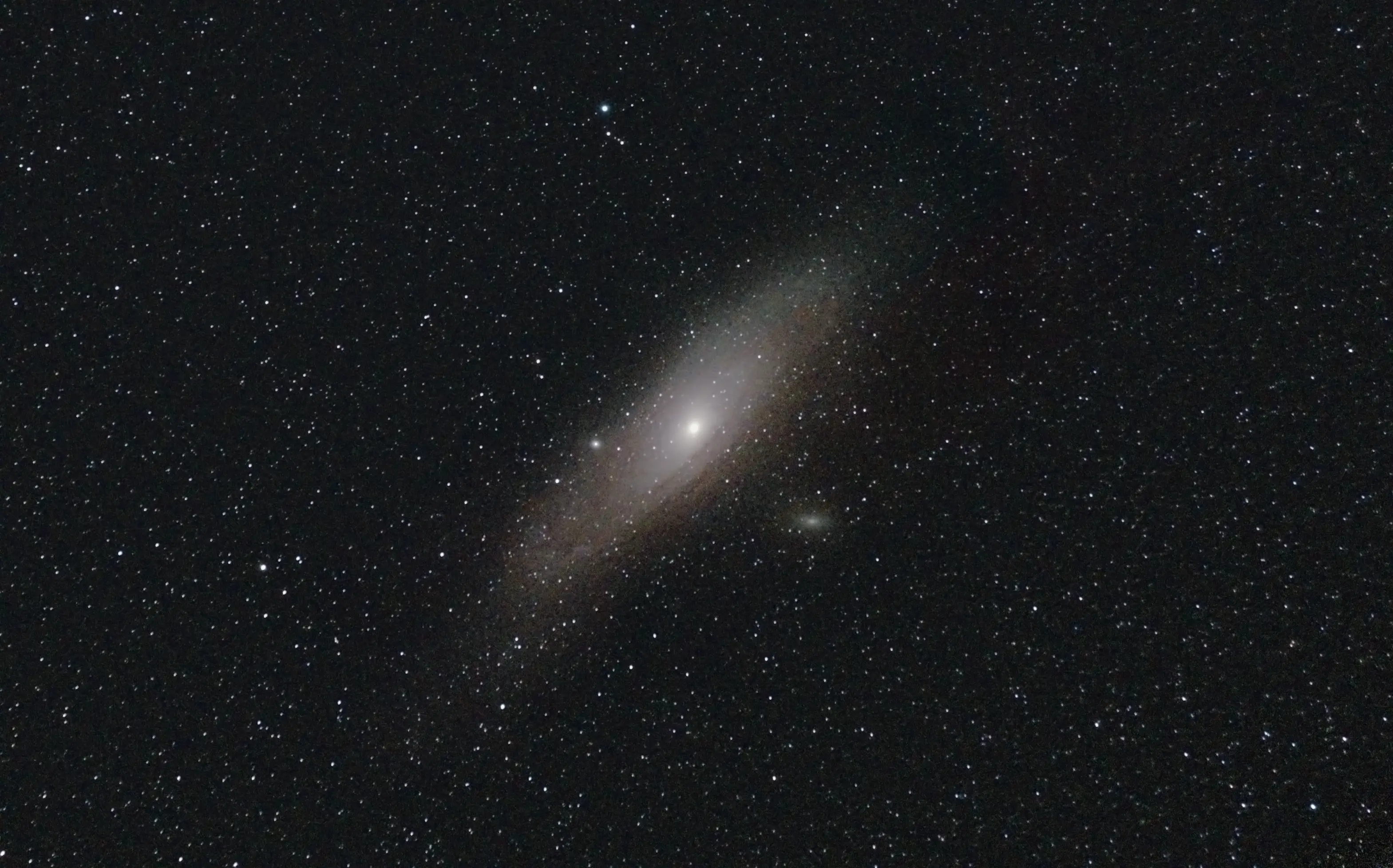
Once, in a secluded mountain valley in the Swiss Alps, I ventured out of the chalet at which I was staying for a late-night walk. The air was cool and damp, as it often is at night at high altitudes, and I found my way around my the starlight, roughly following the gravel path that wound hundreds of miles in each direction around Mont Blanc. Save the gentle ringing of the cowbells, not a sound could be heard. I gazed up at the sky, in awe of the millions of tiny, sparkling stars stretching out against it, soaking myself in this rare revelation of their true beauty, far from the blinding, heretical lights of mankind that so often drowned out their music. Yet the longer I admired, it seemed the stars seemed to stare back at me—their gaze growing in intensity, as if millions of those little bright eyes (in reality colossal stars, eons away) were trained down on me, watching my every move. They seemed to ask: “Who are you, a mere mortal, to think we deserve your admiration? For you, the veil may have been lifted, but we have always been able to see you”. Tears of terror and awe welled up in my eyes, and I had to stabilize myself against the fence separating me and my bovine companions, who, unlike me, seemed to have made peace with their utter insignificance.
What was I, nay, what are we all, but a mote of dust on a mote of dust suspended in a sunbeam? It is over and on this little speck we call Earth, imperceptible in the grand scheme of things, that we have lived, died, fought, murdered, sacrificed, loved, cried, rejoiced, prayed, laughed, sobbed, betrayed, lied, denied, discovered, pursued, invented, and done so much more. Put briefly, the sum of all human achievement ever has been just a temporal speck—an ant hill at the gates of venerable castles of marble that have stood unyielding for millennia.
So, then, is everything pointless? I beg to differ. Man is defined not by the magnitude of his achievements, but by much he has labored to bring them about. And labored we have, for millennia of our own. In four thousand years, we have gone from attaining knowledge, to recording it, to understanding it, and now, to creating it. In that way, each and every life is invaluable—another stepping stone in the eternal mission of the human race to obtain its place among the stars. The heavens have been fixed in place for millions of years but we’ve been hustling since we’ve been around. Sure, it’s only baby steps for now, but who’s to say where we’ll be in another four thousand years? Forty thousand? Four hundred thousand? Four million?
Looking at it that way, forty years doesn’t seem that bad at all. If anything, there’s more of a point to it—that’s all the time we get to fill in the shoes of those who came before us, and accomplish greater feats than ever before. Ad aspera, ad astra, ad aeternum.