
“In the end, that’s what this election is about. Do we participate in a politics of cynicism or a politics of hope?”
I open with the above quote at the not-so-calculated risk of anyone who’s ever taken a public speaking class clicking off this page. But I think that, partisan political platitudes1 aside, the underlying sentiment of Obama’s all-too-famous 2004 DNC keynote continues to hold its relevancy, especially in light of recent events.
Much like the 44th president, let me be clear — I’m not here to offer a comprehensive political analysis of what went wrong, what went right, and what’s to be learned, nor am I here to lament or celebrate the results of this year’s midterms. You can find plenty of pundits, staffers, and analysts on and off K-street who have already beaten that horse all the way back to the steppes of Mongolia.
What I am here to do, in my usual sociological approach, is to offer some observations on the reaction of the American people to this election. Particularly, in my opinion, the landslide Democratic victory cannot be solely attributed to the incompetence of the incumbent, but is owed to the claim the Democrats have, finally, relaid on the aforementioned “politics of hope”.
Just two years ago, young men in America faced a crisis of conscience, increasingly driven to the reactionary right due to perceived alienation by progressive politics and a lack of purpose and meaning. The GOP in 2024 took full advantage of that, vowing to dismantle the “woke” agenda and rebuild America from the ground up. What worked so well for the GOP then was capturing a certain nostalgia — an image of a strong, united America unimpaired by a pandemic or economic crisis — and seizing it as unabashedly, wholly Republican.
Trump’s MAGA populism owes its early victories to quite literally harnessing that “politics of hope”, even in its very slogan. The lack of a coherent Democratic response to “Making America Great Again” (has America not always been great?) reeked of a cynicism that, combined with the floundering chaos that characterized the 2024 DNC, led to voters flocking to a well-organized GOP in droves. Viral “owning the libs” moments painted the left as soft and weak against a GOP that would do what needed to be done. The numbers prove it — Trump won young men by a landslide in 2024, largely through a promise of hope and purpose, that, however realistically untenable, carried resonance.
So what has happened in the last two years, then, to drive so many of those young men, including myself, to the left? Well, put simply, it’s cool to be woke again. The power of the left has always been its antiestablishmentarianism, which has allowed progressive movements to win over more rebellious youth time and time again. MAGA’s genius in 2016 was flipping that idea on its head and turning the left into the establishment. Indeed, the political correctness of Clinton and Harris was a massive detriment to their campaigns, tainting their perception as inauthentic and astroturfed. On the other hand, Donald Trump owed his virality to his ability to be outrageously candid with friend and foe alike.
In a remarkable reversal, however, the Democrats have organized around their own populist candidates and reclaimed the “politics of hope” from the GOP. A large part of that success is also owed to using the GOP’s own tactics against them.
Take a look at the effectiveness of the GOP’s name-calling this time, for example. In a manner reminiscent of the Thirteen Colonies proudly reclaiming Yankee Doodle for themselves, leftists have ironically embraced right-wing fearmongering, proudly asserting they will establish “Shakira law”, add a “-stan” suffix to blue states, and mandate teaching the “trans agenda” in elementary schools. These strategies have worked remarkably in deriding the Republican platform as ridiculous, out-of-touch, and hyperfocused on the same identity politics the GOP was decrying just two years prior. Leftists reference Chiang Kai-shek and the Kuomintang’s flight to Taiwan in memes of Haley Stevens fleeing to the Upper Peninsula of Michigan, and photoshop Democratic candidates as Soviet and Allied generals encircling Berlin in 1945 (The right, meanwhile, has decided to proudly claim the Empire from Star Wars…and genderbent Harry Potter…?).

The core idea is simple, though — the left is no longer afraid to be politically incorrect and throw some punches, and it has done wonders for their reputation among young voters as genuine and sincere.
And the Trump administration really hasn’t been helping its own case either. Between a disastrous quagmire in Iran obliterating any strides towards affordability and an alliance with Israel that an increasing number of Democrats have been speaking out against, they’ve sabotaged their own credibility of putting America first. The GOP has once again attempted to fight with fire, hoping for the same viral “libs owned” response as last time, but this time, their name-calling has come off as juvenile to voters, who have frankly been left feeling as though a bunch of edgy, masculinity-obsessed high school boys are running the country (the Secretary of Defense calls for public executions, the Vice President insinuates James Talarico is gay, the President asserts that Abdul el-Sayed will have to go through metal detectors at Capitol Hill, and federal agencies post serif-populism, 4chan-inspired, neo-Nazi-esque propaganda on official accounts).
Crucially, though, after a decade of blundering in counteracting MAGA populism, it seems the Democrats have finally gotten their act together and learned how to fight back. Rather than the past cynical approach of trying to convince voters MAGA will destroy democracy, they’ve emphasized that MAGA is too incompetent to even do that, let alone run a country. To a country tired of the doom and gloom of being told our future hangs in the balance with each election, this new Democratic strategy has carried real weight. Asking, “What happened to us? We’re America. We’re better than this,” instead of lecturing voters on their immense responsibility has succeeded in reawakening a national pride in democratic institutions among Americans that had all but vanished in the decade prior.
A certain liberal optimism seems to have reemerged within the Democratic party as they look forward to an America after Donald Trump. In short, that “politics of hope” and the vision of a better America has been reclaimed by the Democrats with ease as the GOP crumbles under the weight of internal infighting and foreign stakes. After a long time, voters finally feel again that the Democrats are proud to be Americans. Democratic Texans, for example, have started putting up American flags, and Ralph Lauren flag sweaters are going viral on social media as people celebrate finally being able to wear them again.
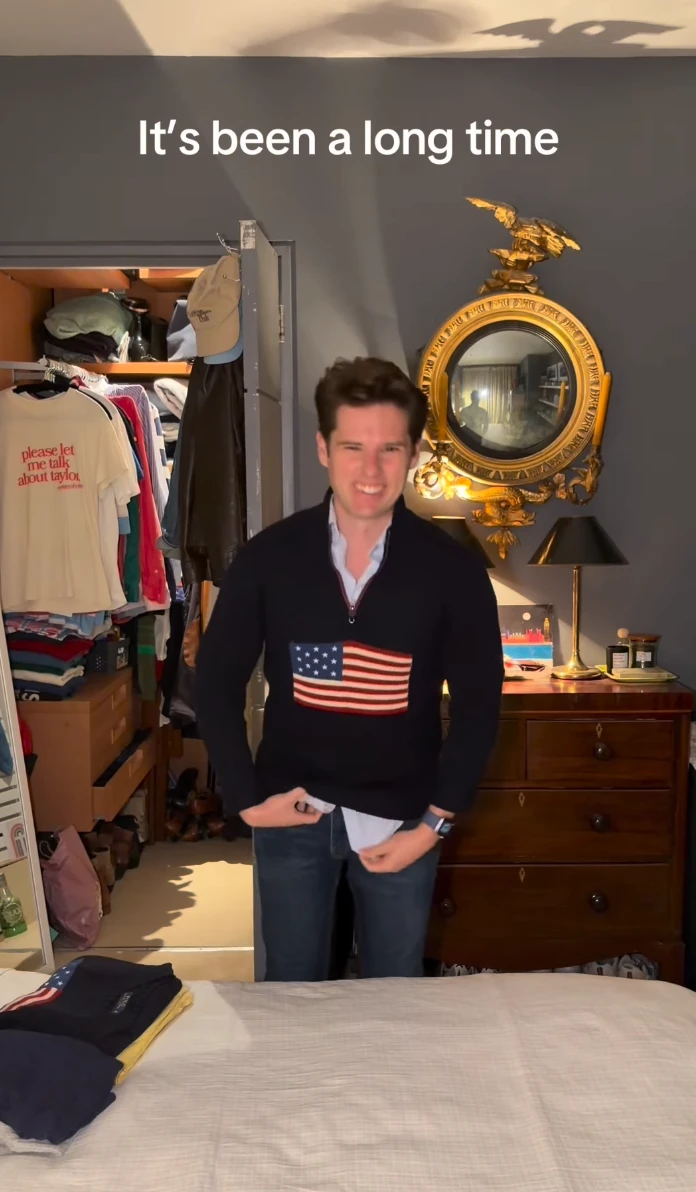
The left’s real victory has been finally reassociating liberalism with national pride. There was a palpable excitement on my college campus too and a preponderance of bright blue sweaters. The reassertion that this is our country, too, and we will take it back, has carried with it that “politics of hope” that has led to a jubilance among the left, even in spite of Trump still holding the presidency.
Well, okay, maybe I lied at the start. I will give one lesson to be learned. It’s that we as a country are driven unequivocally by hope, not cynicism, and by pride, not hate. This week’s events are definitive proof of that, an encouraging indicator of national optimism, and proof of the power of a “politics of hope”.
1 My high-school English teacher(s) would be very proud of me for this (unintentional) alliteration.